
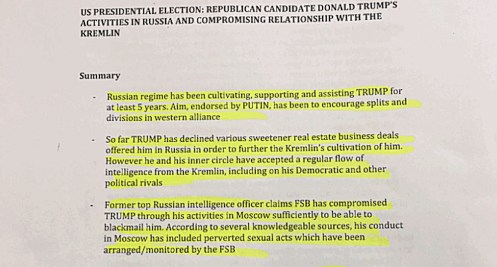
Just a couple of hours before President Obama was to make the farewell address for his presidency, an explosive breaking news report that the Russians had gathered compromising information on Donald Trump hit the airwaves.
The website Buzzfeed has published the entire alleged report, emphasizing that the dossier “includes specific, unverified, and potentially unverifiable allegations.” CNN reported that a synopsis had been briefed both to the President and the President-elect. According to CNN, the allegations came “from memos compiled by a former British intelligence operative, whose past work US intelligence officials consider credible. The FBI is investigating the credibility and accuracy of these allegations, which are based primarily on information from Russian sources, but has not confirmed many essential details in the memos about Mr. Trump.”
To read the entire report, click here.
Trump immediately tweeted that the report was “fake news”, and Kellyanne Conway claimed that Trump was “not aware” of any briefing on the matter.
The dossier reportedly has been circulating in journalistic, intelligence, and political circles in Washington for months, and David Corn of Mother Jones published a story about it (without details) on October 31.
One obvious question is whether the FBI or US intelligence services have been able to substantiate or discredit the allegations. It’s a sticky and tricky problem: How can these agencies effectively investigate allegations against the man who is or will be their boss? Is it even possible? And if they find something, how would it be disseminated? Or would it be suppressed?
If nothing else, this shows yet again the potential for these murky connections between Trump and Russia to sow doubt and mistrust in and within the US government and public.
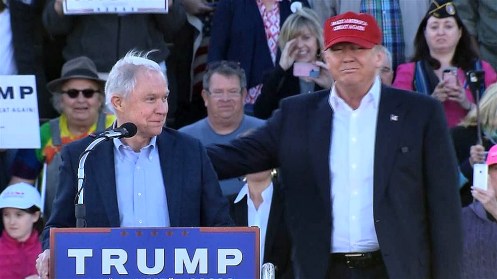
I have always liked and admired Senator Cory Booker (D – New Jersey), but now I LOVE Cory Booker, because he will testify against Attorney General nominee Jeff Sessions during the confirmation hearings starting today. This is a very big deal, because it is extremely rare for one senator to openly oppose another in the clubby senate. It takes guts to do that because it entails a major personal risk in that go-along-to-get-along atmosphere. It also means that Booker is profoundly disturbed by Sessions’s views, as well we all should be.
The symbolism of Trump’s nomination of Sessions, white Alabamian with a history of hostility to civil rights, to succeed two African-American attorney generals under Obama could not be more plain. In 1986, under the Reagan administration, Jefferson Beauregard Sessions III, was rejected by the Senate for a federal judgeship, primarily for his racist attitudes. Since then, he claims to have modified his views and supported civil rights issues, but former colleagues have disputed his conversion, and his confirmation is opposed by the NAACP, the ACLU, and other civil rights groups.
The nominee’s views are important because the Attorney General has enormous discretion about which cases to pursue and which to ignore. Eric Holder and Loretta Lynch have led the federal government to investigate the pervasive racial bias in policing and the judicial system that has been exposed in recent years. We cannot not expect that to continue under Sessions. If you believe Black Lives Matter, then Sessions is probably not your man.
Trump’s views on immigration are essentially identical to those of Sessions. In fact, they likely originated with him. (Check out this video here.) Sessions has consistently opposed any path to legalization or citizenship for undocumented aliens in this country and favored deportation. If you believe that the millions of undocumented people living and working in this country and their children deserve a chance to come out of the shadows and live without fear, then Sessions is not your man.
Indeed, Sessions has opposed every progressive reform over the last 40 years. He was against gay marriage and gay rights in general, he opposed the repeal of don’t-ask-don’t-tell, he doesn’t believe in climate change, he is a hard liner on sentencing and drug policy.
If you like your weed, just remember that using marijuana is still a federal crime. Under Obama, the Justice Department decided not to pursue legal action against states that had legalized pot for medical or recreational use. That policy could very well be overturned under Sessions.
Perhaps most important is that Sessions would almost certainly not use the Justice Department to oppose the wave of restrictive voter suppression measures that Republicans have imposed in state after state where they are in control.
Basically, Sessions is a compendium of conservative white Southern attitudes and beliefs.
If you find this disturbing, call your senator now. This train is moving fast! To find out how to contact your senator, click here.
The blood had hardly been mopped up and the bodies removed from Terminal 2 of the Fort Lauderdale airport, when Florida State Senator Greg Steube (R-Sarasota; **semi-related sidebar below) announced that he would not withdraw a bill he had introduced into the state legislature to allow open carry of firearms in Florida airports. The bill was scheduled to be presented to the senate Judiciary Committee on January 10. [Note: It isn’t clear at this writing whether that meeting has been canceled or not.] Given the current composition of the Florida legislature with pro-gun Republican majorities in both houses and a gun-loving Republican governor, the bill stands a good chance of passing.
At present, Florida is one of surprisingly few states that include airports in proscribed “gun-free zones.” Steube’s bill would remove airports from the list of such zones.
According to Steube and other proponents of the more-guns-everywhere-makes-us-all-safer argument, mass shooters are attracted to “gun-free-zones” because they know that there won’t be armed civilians there to shoot back. They claim that gun-toting citizens would be able to protect others in an active shooter situation by shooting the bad guy.
The flaws in this argument seem pretty obvious to me and to others who favor stricter gun regulations. To my knowledge, the proponents of this theory have not been able to come up with actual instances where this scenario has occurred. On the contrary, there have been several recent mass shootings where armed guards or civilians were present but did not prevent multiple killings, for example at the Pulse nightclub massacre in Orlando. Mass shooters typically expect to be killed while making their violent statement, so the idea that the possible presence of armed vigilantes would be a deterrent makes little sense. Armed guards (or theoretically open-carrying civilians) are often the first to be shot, as the shooter has the advantage of surprise. Concealed weapons are likely to be not immediately accessible, giving the killer plenty of time to get off multiple shots before an armed citizen could respond.
Moreover, the likelihood of more casualties caused by “friendly fire” in crowded places like airports is very high, and there is no way to determine the malign intentions of someone walking around carrying a firearm until he actually opens fire. Law enforcement officers usually say that the presence of armed civilians causes more confusion, because they can’t readily tell if an armed person is the shooter they are trying to apprehend or a citizen trying to help. This was the case in the recent targeted shooting of police in Dallas. Seeing non-uniformed men carrying semi-automatic rifles in an airport would not foster a sense of security for most people. My first instinct would be to call 911.

Donaldito firing a handgun with silencer. “That thing is awesome!”
In other news, the day after the Fort Lauderdale murders, the Washington Post reported that Donald Trump, Jr. (the slickest and, to my mind, the most repellent of the Trump kids) is backing a bill to relax restrictions on silencers for firearms. The bill, which stalled in Congress last session, is being pushed as a public health measure because it would “protect the hearing” of hunters. It’s called (no joke!) the Hearing Protection Act.
The bill would end treating silencers in the same category as machine guns and grenades, eliminating a $200 tax and a nine-month approval process.
The implications for law enforcement and their potential and likely misuse by criminals as well as terrorists and mass killers are so obvious that they hardly bear repeating. Just consider, for example, how many more people could be shot in a crowded, noisy place like an airport or a nightclub before everyone in the place realized there was an active shooting happening.
Watch this video (apparently made last September), in which Donaldito fires a rifle and handgun with silencers and then sits down with the owner of the silencer company to lament how unfair it is that he can’t use a silencer in “the People’s Republic of New York”. He then segues into a solemn discussion of how much better “Second Amendment rights” will fare under a Trump administration, while grossly distorting and misrepresenting Hillary Clinton’s position on gun rights.
Just try not to throw up in your mouth.
**Interesting Steube “family values” story: According to the Sarasota Herald Tribune, back in 2011, then-state representative Greg Steube called the office of his father, Manatee County Sheriff Brad Steube, the morning of May 20 to report that armed intruders had broken into his Parrish home and raped his ex-girl friend (who was also the mother of his child). After a frenzied investigation lasting three days, the ex-girlfriend admitted that she had made the whole story up. She was never charged with filing a false police report, though 10 other people had been prosecuted for similar false stories during the previous year.

Kathleen Parker, a conservative (sic) columnist for the Washington Post, has just published a remarkable piece which concludes as follows:
In sum, when the president-elect persists in a state of denial, siding with the enemy against his own country’s best interests, one is forced to consider that Trump himself poses a threat to national security.
In Russia, they’d just call it treason.
She is certainly not the only person to be puzzled and alarmed about the significance of Trump’s contempt for and rejection of the US Intelligence Community and his persistent fawning admiration for Vladimir Putin. What does it mean that he refuses to acknowledge Russian meddling in the US election for his benefit? Or that more than once he urged Russia to hack Hillary Clinton?
Let me ask a related question: If Trump weren’t elected president, could he be approved for the security clearance required of the people who prepare the daily intelligence brief that he thinks he doesn’t need?
Anyone who works in the US intelligence community, or who has access to sensitive intelligence reports produced by it, must have a Top Secret/Sensitive Compartmented Information (TS/SCI) clearance. (The president, of course, automatically has access to everything.) To obtain such a clearance, an applicant has to provided detailed personal information prior to undergoing a thorough background check, in the course of which investigators typically interview neighbors, work associates, and others who know the person being cleared.
The investigation would normally focus on three basic areas:
- personal history and lifestyle (for example, criminal charges or convictions, sexual conduct that might make someone susceptible to blackmail, drug use, gambling, etc.)
- financial assets and liabilities (for example, past bankruptcies, credit history, who does the person owe money to, where are his assets located and who else has an interest in them, etc.) and
- associations with foreign governments or individuals.
The objective, obviously, is to ferret out anything that might make someone subject to influence by anyone hostile to US national interests and security.
Leaving aside Trump’s personal history and lifestyle issues, it is truly astonishing how little is known (at least to the American public and press) about his financial ties and foreign associations. Trump’s absolute refusal to follow precedent and release his tax returns certainly feeds the belief that he is hiding things that are at least highly embarrassing or at worse disqualifying to hold the presidency. The amazing thing is that he has gotten away with it! No one really talks about that anymore.
Nor has this country ever had a president with such a far flung web of foreign business holdings which inevitably involve dealings with foreign governments and officials. The foreign emoluments clause of the constitution pretty clearly requires that he divest himself of those assets or place them in a true blind trust, particularly since the Trump organization is a privately held corporation. Merely handing them over to Donald Jr., Eric, or Ivanka and her husband–all of whom Trump is trying to bring into his administration is one capacity or another–is plainly not enough. The extent of his foreign holdings and liabilities has not been made public, and it appears that Trump intends to stonewall on this just as he did on his tax returns.
But it’s the Russian connection that is the most disturbing. Unless there is transparency about Trump’s dealings with Putin and the Russian government, banks, and oligarchs, then the working assumption must be that he is likely beholden to them in ways we have yet to learn. But the odds are that we will get no more disclosures from him by January 20–or ever–than we have now, which is exactly nothing.
There are just too many red flags here to justify granting a security clearance to anyone else with such information gaps, but of course Trump isn’t anyone else–he will be the president.
Our government is simply not equipped to deal with a president who refuses to abide by long-established norms of conduct. Congress could demand an investigation, but with a Republican majority in place, it won’t. The Democrats, the media, and the American public need to continue to make a stink about this. Trump is counting on a short attention span to make suspicions about the “Siberian candidate” go away.
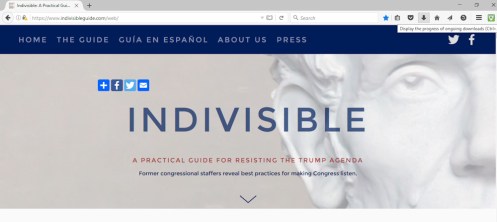
If you’re anything like me, you were both stunned and depressed by the election results. For me, it has been like going through the stages of grief. Well, I’m still grieving, but I’m ready to strike back. The question was how to do that. I really had no idea.
I happened to be watching Rachel Maddow’s show when she did a segment on a publication called “Indivisible: A Practical Guide for Resisting the Trump Agenda.” I googled it and found the website, and I think this is a brilliant publication. Apparently, the hits on that site have since gone through the roof, and deservedly so.
The URL for the site is here.
I urge anyone who is disturbed and angry about what is happening since the election, to take a look and use this guide to taking some action. The basic premise is that for resistance to be effective, it has to work through the political process. Complaining and exchanging posts on social media is all fine, but the way change happens is through politics, as much as we might not like to think so. That’s how the Tea Party came to dominate national policy. What worked for them can also work for us.
This guide provides practical advice for effectively bringing pressure on public officials, and it is written by people who worked as congressional staffers and know what works and what doesn’t.
So check it out! We can’t just sink into a passive depression about Trump and the Republican agenda. The important thing is to engage and do something, at whatever level is feasible for you.
E pluribus unum!
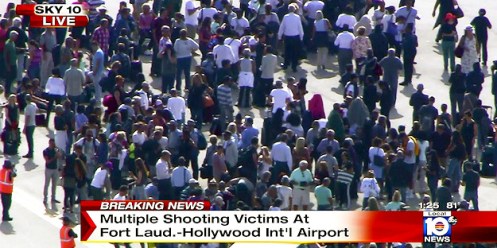
Yesterday morning, I boarded a plane at Washington’s National Airport for my flight back to south Florida. A couple of hours later, as we were descending to land at Fort Lauderdale, I glanced up to see on the TV screen of a nearby passenger a “breaking news” flash: “Shooting at Fort Lauderdale/Hollywood International Airport.”
My first thought was that our flight would be diverted to another airport, but it wasn’t. As we landed, we watched our screens as the reported death toll mounted. The pilot came on the intercom and announced that we would be held on the ground and that he had no information about how long it would be before we could deplane.
As the hours went by there on the taxiway, the pilot gave us periodic updates, but there was very little information to impart beyond the fact that the airport was completely shut down. The passengers on the plane were calm and patient, the flight crew was excellent and did what they could to make everyone comfortable. The toilet filled up, but the ground crew managed to service it so it could still be used. So we waited as the afternoon went by and it got dark.
More than six hours later, one gate opened at Terminal 3, and our flight was third in line to unload. There was no information about what to do next. No taxis or private vehicles were allowed to enter the airport to pick up the growing crowd of passengers, and no one was there to direct them. I asked a policeman how we could leave, and he said there would be buses to take everyone to the cruise terminal at Port Everglades. But there were no buses in sight.
Hours went by as the crowd (by now there were probably a few thousand people) kept growing, and the few buses that passed were already full. Finally I was able to squeeze on a bus by playing the senior card, and we left for Port Everglades. Normally that trip would take maybe 15 minutes, but it was more than an hour getting to the terminal because the sole entrance to the port was jammed with police vehicles and other traffic. The terminal was another chaotic mess. There was no one to tell people what to do. I found a policeman, who told me that his advice was to walk a mile or so over to US Route 1 and try to get a taxi. So I started walking when, miraculously, a taxi appeared. I got home after midnight.
Of course, we were the lucky ones. Five people had their lives suddenly snuffed out, and six others who were shot will probably never be the same.
A few thoughts:
- On the plane, there were no gasps or cries among the passengers when we all learned about the mass murder at the airport. Everyone pretty much took it in stride, I think because mass shootings have become so commonplace that they almost seem normal. No one is surprised anymore.
- The shooter reportedly had his weapon in his checked luggage, and removed it at the baggage claim and loaded it in the restroom there before he came out and shot 11 random people. Putting guns and ammo in checked luggage is perfectly legal. How is that still possible?
- The shooter reported had mental health issues and was known to the FBI. Yet he had no problem acquiring a gun.
- More people were not shot only because the shooter ran out of ammo and waited for police to arrest him. Nobody actually stopped him.
- Although it is now technically illegal to carry a gun into airports in Florida, a Republican state senator, Greg Steube, has introduced legislation that would remove airports from “gun-free zones”. There are many states where it is perfectly legal to walk around airports with a gun. That is insane!
- Unrestricted areas in airports are essentially unprotected. In actuality, anyone can now walk into unrestricted areas, like baggage claims, with a gun and no one would know it. Fort Lauderdale now joins Brussels and Istanbul in having mass killings in such areas.
Nothing will change under the Trump administration. If anything, gun restrictions are likely to be relaxed. As Gail Collins points out in today’s New York Times, Trump has promised to “unsign” Obama’s executive order closing loopholes in online and gun show sales. The NRA relentlessly opposes expansion of background checks, and both Trump and the Republican party are firmly in its pocket.
Moreover, Trump ascribes to the macho fantasy that having more guns around will make us all safer. After the Bataclan massacre in Paris, he tweeted “I can tell you that if I had been in the Bataclan or in the cafes, I would have opened fire. I may have been killed, but I would have drawn.” Of course, that is nonsense, especially coming from a chicken hawk who avoided military service because of “bone spurs” in his foot. None of the recent mass shootings have been prevented by having civilians packing guns present when they occurred.
So where will the next mass shooting be? Will we even notice?


Have we ever seen a transition like this one? The inauguration is still two weeks away, and already Washington and, indeed, the whole country are in complete turmoil.
Trump is defending Putin and Russia while pissing on the US Intelligence Community and its unanimous finding that the Russians are carrying out an extensive and sophisticated covert cyber operation against the US that goes well beyond hacking the Clinton campaign to influence the election. General Clapper, the Director of National Intelligence, testified to that effect in Congress this afternoon. Can’t wait to see The Donald’s revenge tweets on that! Early in the week, Trump claimed to know things that nobody else knew, which he would reveal on Tuesday or Wednesday. It’s now Thursday, and bupkis.
Trump has tweeted appreciation for WikiLeaks guru Julian Assange, who has been holed up in the Ecuadorian embassy in London since August 2012 to avoid arrest on charges of sexual assault in Sweden. (Hmmm, a little mutual sympathy between the boys?) Assange is now claiming that the leaked documents didn’t come from the Russians, while in the past he has stated that WikiLeaks did not try to determine who was giving them the material they disseminated.
Meanwhile, the Republicans’ first act of the new Congress was an attempt to gut the Office of Congressional Ethics. When forced by public outrage to drop that effort–for now—they segued immediately into the far bigger objective of repealing ObamaCare as the first step toward shredding the social safety net that has been painfully cobbled together since the Roosevelt administration.
With a couple of notable exceptions (John McCain and Lindsay Graham, who convened the Clapper hearing today), the Republican congressional leadership has been remarkably silent about the Russian cyber issue. (Come to think of it, why isn’t the media calling this “the Russian cyber scandal”?) So far the attitude is “nothing to see here, folks, keep moving along.” Had the roles been reversed, surely there would be a Special Prosecutor by now!
So what’s really going on here? It’s like “The Americans” meets “House of Cards”, only far more confusing and complicated. Is there a pony for the GOP somewhere in this pile of shit?
Here’s my working hypothesis:
I’m not yet convinced that Trump has a master objective beyond becoming il capo di tutti capi. His views are so malleable and situational, changing according to his audience. His actions and words seem tactical, not strategic. We’re seeing a truly gifted con man (hey, that’s what Rubio, Perry, and Romney all called him!) at work.
It’s the technique of multiple distractions. He puts up such a shit storm of jaw-dropping outrageousness that no one can focus on any one thing. The media and his adversaries can’t follow up on it all because there’s just too much! Maybe he gets caught out on a couple of things, but meanwhile he gets away with lots of others. And his fans just love the show!
The congressional Republicans are scared of him. They have seen him toy with Mitt Romney and then dismiss him after Mitt humiliated himself by begging to become Secretary of State. They have seen Trump reduce Chris Christie to a pathetic lickspittle and then contemptuously kick him back to Trenton. Marco Rubio, watch your back!
But the congressional Republicans do have a strategy and a plan. They see Trump as the performer, while they are the suits. He will keep the nation entertained, transfixed, and even horrified, providing smoke while they go about their business of dismantling the federal government or monetizing parts of it for private profit.
Trump is Tony Soprano, and the Republicans are the Bolsheviks. They can do business!
The orgy of destruction by the new Congress has already begun. No sooner was the swearing-in ceremony over than the Republican majority grabbed for the axe to kill the Affordable Care Act. There is nothing to stop them now, and no one has a clue what will happen when they are successful.
Yet one of the enduring mysteries of recent politics is why Republicans have been so single-mindedly determined to destroy the Affordable Care Act since its very inception.
After all, the ACA was famously copied from the program that Mitt Romney instituted when he was the Republican governor of Massachusetts, and the idea on which it was based was a product of the Republican-associated Heritage Foundation. Yet when the ACA was passed by Congress in 2010, there was not a single Republican vote in its favor. And Romney himself opposed the ACA when he ran for president in 2012, despite the evident success of “RomneyCare” in Massachusetts.
Except for the rocky roll-out of HealthCare.gov (the website for the federal insurance exchange for people living in Republican-controlled states that refused to set up their own exchanges), the program has been a considerable success. There are now at least 17 million Americans who have health insurance because of the ACA, and there would have been millions more if most Republican-governed states had not rejected the expansion of Medicaid that was one of the pillars of the bill. Both the costs of the program and premiums charged to the insured have been within parameters forecast by the Congressional Budget Office (CBO).
Moreover, according to the CBO, repealing the ACA would add close to a trillion dollars to the federal deficit over the next ten years. Of course, the Republicans never give a damn about the deficit when they’re in charge, and only become deficit hawks when they’re out of power. Remember how the Clinton-era budget surpluses vanished like a mirage under the George W. Bush administration?
None of this has made a dent in the implacable Republican determination to repeal the ACA. Republicans simply assert that Obamacare has been a “disaster” or a “failure”, or they exaggerate the increase of premium costs without consideration of other reductions in medical care costs that the ACA has achieved.
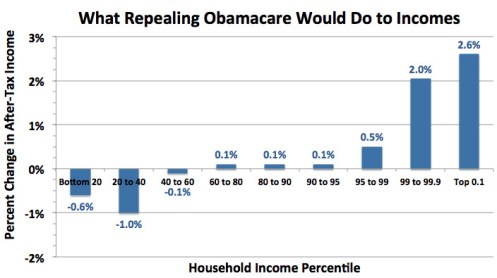
There is, actually, a perverse economic rationale for repeal, but only if you buy into the GOP’s belief that it’s a good thing to shower big tax breaks on the wealthiest while shifting the burden to the poor. According the non-partisan Tax Policy Center, repealing the ACA would take tax subsidies for the poorest Americans in order to give a tax reduction to the very rich. The bottom 40 percent would see an effective reduction in their income, those in the middle (up to the 95th percentile) would be virtually unaffected, while the richest 5 percent would get almost all the benefits. For the very top 1 percent this would mean an average tax saving of about $32,000 a year. Of course, Republicans never talk about that.
But the basic reason that Republicans hate the ACA is that it’s a government program. This offends their religious belief that government programs are evil (excepting the military or police, or programs that benefit their key constituencies like agricultural subsidies). They believe that government does not work, and then they do everything possible to make sure that it doesn’t. Evidence to the contrary, demonstrating that some programs are actually successful in improving the lives of millions, makes no difference.
For the same reason, Medicare, Medicaid, and Social Security are once again in the Republicans’ crosshairs.
Finally, the fact that the ACA is President Obama’s proudest achievement means that it must be destroyed. The shameless and unrelenting obstruction to anything associated with Obama and the shocking—and, let’s say it, racist—contempt and disrespect shown to him personally by Republican politicians remains outrageous. It was the Republicans who mockingly applied the term “Obamacare” to the ACA, and it infuriated them that he had the political jiujitsu to make the label his own and turn it to advantage. Now it’s the Republicans’ mission to obliterate his legacy.
Reconstruction gives way to Jim Crow.
Fraud involving absentee ballots is nothing new in South Florida.
According to the 2012 Grand Jury report on absentee ballot fraud, the 1997 election for mayor of Miami was so plagued by ballots filled out by boleteros that an investigation was launched, ultimately resulting in the successful prosecution of some 54 people, including a City of Miami commissioner, his chief of staff, and the chief of staff’s father. Following a civil lawsuit by the losing candidate (Joe Carollo), the judge found fraud in so many absentee ballots that he threw them all out, which resulted in the losing candidate being declared the winner over his opponent, Xavier Suarez. [Karma note: Xavier Suarez is the father of Francis Suarez, who recently withdrew his candidacy for mayor of Miami after his campaign workers pled guilty to absentee ballot shenanigans; Joe Carollo is the older brother of Frank Carollo, who is running for re-election as District 3 commissioner. This is one incestuous town!] Something similar happened in Hialeah in 1993.
The grand jury report notes that the prosecutions for the 1997 fraud were successful—and even possible—because witness signatures were required on the ballot envelope, which enabled investigators to track down people who had “witnessed” multiple ballots. Since then, the requirement was reduced to only one witness, and in 2004 eliminated entirely. Now it is very difficult to tell who may have “assisted” a voter in casting her ballot. For that reason, one of the key recommendations of the grand jury is to reinstate the requirement of a witness signature and contact information.
One of the major old-school methods for absentee ballot fraud is to work the senior living facilities. Old people (and I speak as someone who might be considered one) are often easy prey for conmen who gain their trust and then manipulate or deceive them into doing something they otherwise wouldn’t do. Boleteras “help” the elderly with their ballots, sometimes actually filling them out, and volunteer to deliver them. [Note: Under current law, anyone who assists a voter has to sign a declaration that he is not an employer or union official, but there is nothing that prohibits a paid or volunteer campaign worker from doing so. The grand jury recommended adding such a clause to the declaration.] Once the boletera has the ballots in hand, she can deliver them, mail them, alter them, or—if they’re not marked for the candidate she’s working for—destroy them.
Then, there are the campaign workers who show up at the homes of people who have received absentee ballots and offer to “help”. This may have been what was going on in Homestead last week.
How do they know which houses to target? Shockingly, candidates have access to the names and addresses of anyone who requests an absentee ballot, which is something that you and I do not have. Yes, you read that right. Information about voters who request absentee ballots is treated as confidential, EXCEPT for “the voter requesting the ballot; a canvassing board; an election official; a political party or official thereof; a candidate who has filed qualification papers and is opposed in an upcoming election; and registered political committees or registered committees of continuous existence, for political purposes only.”
You can sense the incredulity and indignation of the grand jury about this: “Simply stated, individuals and groups who have a direct and obvious interest in issues or candidates on the ballots have the ability to get the name of every voter who requests an absentee ballot, the voters’ residence address and the date the voters’ absentee ballot is mailed. The persons who have the most to gain from the election are the ones who have access to this confidential information. For someone who is predisposed to engage in inappropriate and/or illegal activity with respect to absentee voters, this…arms them with the specific information of whom they should target and where and when they should move in on the target. The…”exception” effectively paints a bull’s-eye target on the back of every vulnerable absentee voter. We strongly recommend that the legislature remove the bull’s-eye by limiting the public records exemption, and making this information available only to a canvassing board or an election official…”
These old-school techniques are specifically geared to victimize vulnerable elderly and poorly educated elements of the community and generally require some face-to-face contact with the would-be voter. The newer approach of requesting bogus ballots on-line or by phone does not.
As Herald journalist Marc Caputo pointed out, all you need to get an absentee ballot is someone’s phone number, address, and date of birth. He then described how he did it by calling from a blocked phone and having the ballot delivered to a co-worker’s address. The only question asked was whether future absentee ballots should be sent out for the next three years. [Fun fact: More than half of all ABs are sent out automatically, a practice that the grand jury found an invitation to fraud and recommended requiring a new request for every such ballot.]
As Caputo observed, “A sophisticated political group that decides to steal ballots could call as if they were other people — say unsuspecting elderly voters or the 80,000 people in Miami-Dade who vote so infrequently that they’re classified as “inactive” voters. Chances are those voters would never know someone else requested a ballot in their name and had it sent to any of the thousands of foreclosed properties in Miami-Dade.”
According to the grand jury report, “the security of the on-line absentee ballot request system is very low, as there are no user specific log-ins or passwords required by the voter requesting a ballot.” Before the 2012 primaries a computer program submitted more than 2,500 fraudulent AB requests, routed through anonymizers overseas to conceal the IP address of the requesting computer. They were flagged as suspicious partly because they were being submitted at a rate that was humanly impossible. Jeffrey Garcia, the former chief of staff to Congressman Joe Garcia, who recently pled guilty to requesting 1,700 ABs without voters’ permission, apparently was nabbed because the operation was unsophisticated enough to use a computer with an identifiable IP address.
Theoretically, the safeguard on this type of fraud would be the check of the signature on the AB against the one on file with the election bureau. However, such checks are done visually by election department employees, and given the sheer volume of ABs to be scrutinized, the likelihood of missing a forged signature (or misidentifying a genuine one as false) is significant.
With such feeble safeguards in place, the chances of getting caught and convicted have been pretty slight, unless the perps made some rather dumb mistakes. And even if they were caught, the penalties have generally amounted to little more than a slap on the wrist. Jeffrey Garcia seems to be one of the very few to have gotten jail time. The grand jury recommended raising ballot fraud from a misdemeanor to a third-degree felony as an added deterrent, and noted that lax enforcement of the laws has been the Achilles heel of the voting system.
How likely is all of this to change? As long as Republicans control the state government, don’t hold your breath. As Caputo observed, Republicans dominate absentee balloting and have little incentive to limit it even though absentee ballots are the biggest single source of voter fraud. They’d much rather make draconian purges of voter rolls, cut back on early voting, and suppress voter registration.
Current regulations regarding absentee voting can be found here.
Rick Scott and his minions in Tallahassee and throughout the state are mounting yet another effort to purge thousands of people from the voter rolls (a subject for another post) to solve a phantom fraud problem which they can’t demonstrate actually exists. This is the local version of a neo-Jim-Crow Republican effort now happening in many states where the GOP controls the legislature (Virginia, Texas, and North Carolina being perhaps the most egregious examples) obviously intended to reduce voting numbers among people most likely to vote Democrat.
Meanwhile, the Republican-controlled state government has shown no interest in addressing a real—and far larger—voting fraud problem, which is the rampant abuse of absentee ballots. It seems a new absentee ballot (AB) scandal in Miami-Dade erupts in the headlines every week. Some recent examples:
- Campaign workers for mayoral candidate Mark Bell are accused of misrepresentation and fraudulently filling out ABs for a family in Homestead.
- Former chief of staff of congressman Joe Garcia pleads guilty to requesting some 1,800 ABs for voters without their permission (though no ballots were actually cast).
- The elderly uncle of the former Hialeah mayor Julio Robaina and a female AB broker are arrested for illegally collecting ballots and fraudulently completing some of them.
- Miami mayoral candidate Francis Suarez pulls out of the race after two of his campaign officials are charged with illegally requesting ABs for others.
That’s just the tip of the iceberg. The problem has become so pervasive that absentee ballot fraud is suspected of affecting the outcome of a number of elections. There are numerous examples where the absentee ballot count has been so grossly out of sync with the count of ballots cast in person that the appearance of fraud is hard to overlook. Manipulation of ABs is clearly practiced by politicians of both parties and their supporters, and it’s hard to know who are the worst abusers.
It’s not just a Miami-Dade problem either; Broward has had some similar cases, as have other parts of the state. But in Miami-Dade, manipulation of ABs is so commonplace that the people who gather and deliver (and often fill in) the ballots have a special name: boleteros (or boleteras, if female, as many are).
The abuse during the 2012 primary elections became so blatant that the mainstream press and law enforcement finally started paying attention. (Two Miami-based blogs, Eye on Miami and Political Cortadito, had been doggedly exposing the problem for much longer—check their archives for chapter and verse.) This finally created enough of a stink that a grand jury was charged with investigating the problem.
The grand jury’s report on absentee ballot fraud, which was issued in December 2012, is definitely worth reading if you’re at all interested in this issue. It looks at the background of AB fraud, the methods employed, the consequences, and calls for specific remedies to alleviate the abuse. Somewhat to my surprise, I found the document well-written in clear and jargon-free language and easy to understand, and the changes in the law that it proposes make a lot of sense. (The Miami Herald summarized some of the recommendations here.) Unfortunately, most of the recommendations require legislation changes at the state level, which has not yet happened, as far as I can tell.
Voting absentee was once just for people who, because of illness or travel, could not make it to the polls on election day. Until the law was changed in 1997, voters had to “show cause” in order to get an absentee ballot. Now—in Florida, at least—voting absentee is mostly a matter of convenience. Miami-Dade County actually encourages absentee balloting, in part to reduce the outrageously long waits at polling places on election days.
In the 2012 general election, waits of 6 hours or even longer were not uncommon, adding to Florida’s reputation as a national laughing-stock for fucked-up elections. Rick Scott and the Republicans in Tallahassee made the situation worse by cutting back on the number of early voting days, which meant that even for people voting early the lines at the limited number of polling places were unacceptably long. This, of course, makes voting absentee even more attractive, and the use of ABs has grown so much that they often represent more than one-third of all ballots cast.
The problem is that the procedures to assure the identity of in-person voters at the polling site and make sure that they personally fill out the ballot and deposit it in the box, are largely non-existent for absentee voters, and it just isn’t that hard to get around what there is. As the grand jury report points out, absentee voting is essentially on the “honor system”, and honor is not the first word that comes to mind when considering Miami politics.
With such a huge lode of ABs in play, and the integrity of the process so easy to pierce, it’s not surprising that unscrupulous political candidates and their campaign workers have developed methods to manipulate absentee ballots to fraudulently inflate their vote totals. And if every candidate thinks (perhaps correctly) that his opponent is doing it, responding in kind becomes awfully tempting. It could make all the difference in a close election.
The other side of the coin is that absentee ballots are invalidated and not counted at much higher rates than ballots cast in person. According to the grand jury report, in the 2012 general election, some 5,263 absentee ballots in Miami-Dade were rejected for “no signature”, “postmarked late”, “returned undeliverable”, “signature did not match”, or “signed by someone else”. State-wide, some 2 percent of ABs were invalidated—a rate twice that for in-person votes. So even if you request your own ballot, fill it out yourself, and mail it in, if you make one of these mistakes then the ballot could be thrown out and you would never know it.
More next time…
 TrumpWorld for Beginners