
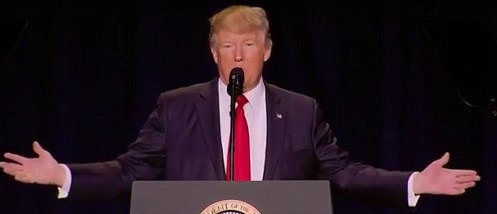
“I will totally destroy the Johnson Amendment.”
Donald Trump is taking a sledgehammer to the always flimsy wall of separation between church and state in America.
Today at the National Prayer Breakfast he vowed to “totally destroy” the Johnson Amendment, which prohibits tax-exempt religious groups from participating in political activity. The law, named for Lyndon Johnson, has been in effect since 1954, and its removal would be an enormous victory for the religious right.
Earlier in the week, a draft executive order on “Religious Freedom” was leaked to the press. The draft order would create wholesale exemptions for people and organizations who claim religious or moral objections to same-sex marriage, premarital sex, abortion, and trans identity, and it seeks to curtail women’s access to contraception and abortion through the Affordable Care Act. covers “any organization, including closely held for-profit corporations,” and protects religious freedom “when providing social services, education, or healthcare; earning a living, seeking a job, or employing others; receiving government grants or contracts; or otherwise participating in the marketplace, the public square, or interfacing with Federal, State or local governments.” In other words, it would create a license to discriminate for a host of self-proclaimed “sincerely held religious beliefs” against gays and, potentially, any number of other vulnerable classes of people. For the full text, click here.
Much of the language in the draft order (which White House staff tacitly admitted was genuine, though not approved–at least not yet) comes from the Hobby Lobby decision by the Supreme Court, which is associated with Neil Gorsuch who ruled on the case at the appellate level and who was nominated two days ago to fill the vacant SCOTUS seat. A number of his other rulings have been based on “religious freedom” arguments. It’s not hard to connect the dots.
These recent developments have removed any mystery about why the religious right has adopted a profane, obviously non-religious, thrice-married, pussy-grabbing libertine as their champion. He is promising to allow them unimpeded political access and support to achieve the holy trinity of objectives shared by both Protestant evangelicals and conservative Catholics: outlawing (which means recriminalizing) abortion, undoing same-sex marriage and other gay rights, and and getting public funding for sectarian education. In essence, they are seeking to upend the supremacy of civil law and allow self-proclaimed religious belief to trump the law of the land. That is, as long as those religious beliefs are specifically conservative Christian ones.
It’s hard to tell if Steve Bannon or Mike Pence is the prime mover behind this strategy, but it doesn’t really matter since they share a common outlook when it comes to erasing the boundary between church and state. For someone who is constantly beating the religion drum, Bannon does not appear to be particularly religious, though he evidently is at least nominally Catholic. His shtick is that there is a war of civilizations between the Judeo-Christian West and the Muslim world, and that the decline of religious belief in the West has left it weak and vulnerable to defeat and subjugation by radical Islam. He constantly uses the term “Judeo-Christian”, which implies a unity of interests and belief, despite centuries of history during which the most relentless and deadly persecutors of Jews were Christians, not Muslims. He has attacked Catholics who view their religion as an instrument of social justice and accused church leaders of encouraging the immigration of Latino Catholics to boost membership in the church. It seems that, to him, religion is a primarily a means to political power rather than a matter of faith.
Mike Pence, on the other hand, describes himself as a “born-again evangelical Catholic,” which pretty much hits all the bases. He has consistently opposed abortion rights and funding for Planned Parenthood and pushed a constitutional amendment against same-sex marriage. He has clashed with Catholic bishops about support for refugees (he was against it), and as Indiana’s governor, he signed the state’s “religious freedom” law which allowed businesses to refuse to serve certain people (like gays) if it conflicted with their religious beliefs. So what is now being pushed by the Trump administration is basically the same thing, only bigger and (from their perspective) better!
Indeed, most of Trump’s cabinet picks (at least the non-Jewish ones) seem to share these views. Most ominously, Jeff Sessions the nominee for Attorney General, has declared that the idea of a “wall of separation” between church and state “is not constitutional and is not historical.” This suggests, at the very least, that the new Justice Department will not actively pursue cases where the plaintiff is opposing the intrusion of religion into secular life.
For many Americans–gay people, for example–these are not theoretical constitutional questions, but rather ones that affect their lives in the most intimate ways. What we are seeing here is a radical counter-reformation using religion as its organizing principle.
I don’t believe for a second that Trump has any “sincerely held religious beliefs.” If you see him in religious gatherings he looks, as my grandmother would say, nervous as a whore in church. But he knows that these are the people who put him where he is today, and they have presented the bill.
Religion is just politics by other means.
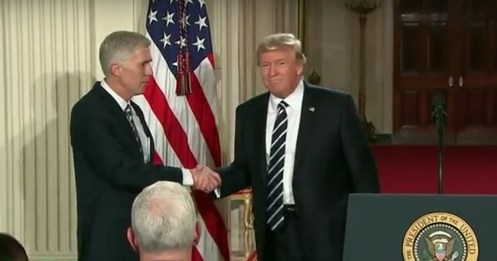
My first thought on hearing that Trump had nominated Neil Gorsuch for the Supreme Court was simply relief that it wasn’t Pryor.
My second thought was to wonder if senate Democrats would fight the nomination and, if so, how hard. Now it looks like they will indeed fight it, but whether they have the votes for an effective filibuster and can sustain it remain to be seen.
There are two basic reasons to oppose this nomination:
The first is simple payback. The Republicans’ unprecedented refusal to even consider Obama’s nomination of Merrick Garland was so outrageous that to acquiesce meekly to Trump’s pick would forever brand senate Democrats as spineless wusses. Garland was an uncontroversial centrist choice who had previously been widely supported and praised by Republicans. Their spiteful refusal to give him a hearing showed their naked contempt for Obama (and, indeed, the Constitution) and their clear intention to further politicize the Supreme Court. Leading Republicans from Ted Cruz to John McCain even threatened to keep the seat empty if Hillary Clinton won and not confirm any Democratic nominee. Now the Democratic base is mobilized and itching for revenge.
The second, and perhaps better, reason is Gorsuch’s record and judicial philosophy. A New York Times analysis actually places him further to the right than Scalia, with whom he has been frequently compared. The analysis quotes a recent academic study which concludes that Gorsuch would be a reliable conservative, “voting to limit gay rights, uphold restrictions on abortion and invalidate affirmative action programs.”
The most insidious aspect of Gorsuch’s judicial record is his penchant for eroding separation of church and state by consistently ruling to grant exemptions for religious beliefs in complying with secular law, even when those beliefs are allegedly held by corporations rather than individual persons.
The best known case is the Hobby Lobby case, on which Gorsuch ruled at the appellate court level. The issue involved the claim by the owners of the Hobby Lobby Stores that the requirement to provide contraception care for its employees under the ACA constituted an infringement of freedom of religion. Both Gorsuch’s appellate court and the Supreme Court (in a 5-4 split) ruled in favor of Hobby Lobby.
There were a number of peculiar aspects to this case. One of them was the awkward fact that Hobby Lobby had provided its employees with contraception coverage before it was required to do so by the ACA, which suggested that its discovery of religious scruples was precipitated more by its objection to ObamaCare than by a long-standing religious conviction. More important was the argument that religious beliefs could be held by the corporation itself as a legal person, as distinct and separate from the owners of the corporation.
A caustic dissent on the SCOTUS decision, written by Ruth Bader Ginsberg, rejected that notion. “In a decision of startling breadth, the Court holds that commercial enterprises, including corporations, along with partnerships and sole proprietorships, can opt out of any law (saving only tax laws) they judge incompatible with their sincerely held religious beliefs. … Compelling governmental interests in uniform compliance with the law, and disadvantages that religion-based opt-outs impose on others, hold no sway, the Court decides, at least when there is a ‘less restrictive alternative.’ And such an alternative, the Court suggests, there always will be whenever, in lieu of tolling an enterprise claiming a religion-based exemption, the government, i.e., the general public, can pick up the tab.”
The dissent further noted: “Until this litigation, no decision of this Court recognized a for-profit corporation’s qualification for a religious exemption from a generally applicable law, whether under the Free Exercise Clause or RFRA. The absence of such precedent is just what one would expect, for the exercise of religion is characteristic of natural persons, not artificial legal entities…Religious organizations exist to foster the interests of persons subscribing to the same religious faith. Not so of for-profit corporations.” The dissent concluded that the Court had “ventured into a minefield.”
Gorsuch has also ruled in favor of religious-based claims in other litigation such as the Little Sister of the Poor case in which the religious order refused to even apply for the religious exemption to which it was entitled by the ACA on the grounds that merely signing the paper constituted an intolerable burden on its religious freedom.
The problem, of course, is that “sincerely-held religious beliefs” can be literally anything. The growing intrusion of religion–specifically fundamentalist Christian religion–into American political life represents one of the most disturbing aspects of the Republican Party’s capture by the religious right. These judicial rulings have been and will be used to justify further claims for special rights, for example, religious-based discrimination against gays.
This alone should be reason enough to resist the confirmation of Neil Gorsuch. It may ultimately be a losing battle, but it’s one worth fighting.
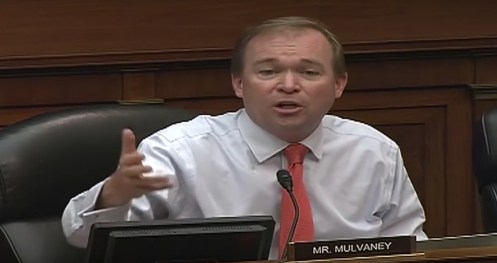
The Office of Management and Budget (OMB) is one of those boring but essential federal bureaucracies that most people never think about. But maybe you should, because Trump has nominated one of the most radical Tea Party fiscal conservatives in Congress to head that key office.
Mick Mulvaney is a Republican congressman from South Carolina who was swept in by the 2010 Tea Party tsunami. He is a founder of the far right House Freedom Caucus that made life so miserable for Speaker John Boehner that he quit in 2015. He is a ferocious fiscal hawk who advocates a balanced budget amendment to the constitution. He voted to shut down the government and risk financial chaos if he didn’t get his way on spending cuts. His obsessive focus has been on cutting “entitlements” like Medicare, Medicaid, and Social Security.
The OMB director is one of the three senior economic advisors to the president and has great influence on policy matters. He will have particular influence on Medicare, to which Mulvaney has advocated drastic changes that would raise the eligibility age, cut benefits, and change it to a voucher system He has also called for changing Medicaid to block grants to the states, which in practical terms will mean limiting eligibility and cutting benefits to poor and disabled people in states (usually Republican-run) that are stingy with social welfare programs and which (not coincidentally) tend to have the highest proportion of people without health insurance. He will certainly have a strong ally in Tom Price, if the latter is confirmed as Secretary of Health and Human Services.
Mulvaney’s opposition to raising the national debt ceiling, if implemented, would threaten the creditworthiness of the US government, as has nearly happened a few times in recent years. And his prescription for requiring a balanced budget would eliminate the principal weapon that the government has to combat a recession, i.e., a fiscal stimulus financed by deficit spending, which has been orthodox economic theory and practice since the Great Depression.
Mulvaney’s passion for spending cuts has not exempted the military, which may turn out to be the greatest obstacle to his confirmation. Senate defense hawks have condemned him for being insufficiently pro-military and for advocating pulling out of Afghanistan. John McCain, in particular, called him “crazy” and accused him of “pitting the debt against the military.”
The other bump in the road happened when it emerged that Mulvaney had failed to pay some $15,000 in payroll and unemployment taxes for a household employee between 2001 and 2004. In the past, “nannygate” scandals like that have been enough to sink cabinet and other nominations, but at a time when Trump publicly flouts conflict of interest laws and regulations who’s going to care much about that now?
But if you or anyone in your family has benefited from Medicare or Medicaid or Social Security or if you think you might like to have access to those programs in the future, you might consider calling your Senator before Mulvaney has a chance to take his axe to them.

Yesterday I was among the thousands of people protesting outside of the White House against Trump’s order banning anyone from seven predominantly Muslim countries from entering the US. The previous weekend I had been among the millions around the country participating in the Women’s March. Both felt exhilarating, organic, and energizing to be a part of.
But they also felt leaderless.I keep wondering who is going to capture and channel this incredible energy and outrage and transform it into effective political action? Where is the Democratic Party in all of this? A grassroots spontaneous movement can be a powerful thing, but if it remains a disorganized expression of anger it will dissipate and dissolve into futility.
Frankly, I think that Democratic leaders are missing in action, and I don’t understand this. The resistance to Trump and the Republican Party agenda is in the hands of a motley collection of organizations, groups, and individuals who are angry and eager to do something. We, the public, seem to recognize that we are now facing an existential threat to American democracy, but I’m not sure that the leadership of the Democratic party gets that. Why aren’t they showing up at these protests?
The Democrats’ performance in hearings for Trump’s cabinet nominees can best be described as wimpy. Take Ben Carson, for example, the spectacularly unqualified nominee for Housing and Urban Development. Both Sherrod Brown and Elizabeth Warren (!) voted for him in committee. What the fuck?!
The Senate confirmed John Kelly for Homeland Security by a vote of 88-11. They voted 96-4 to confirm Nikki Haley as Ambassador to the UN, despite her utter lack of experience in foreign policy or international relations.
This is a crucial week for the confirmation process. For a full list of where things now stand on confirmations, click here. Call or write your senators and hold their feet to the fire.
I understand that Democrats need to pick their battles, and I get that voting against nominees when the Democrats are in the minority may just be symbolic. But symbols matter! Symbols can say where you stand more eloquently than any policy statement.
People like me are looking to the Democratic Party to lead the resistance to Trump because, frankly, we don’t know where else to look. So far, we’re not seeing much.
We are your base! We are ready to fight! Are you going to lead us or not?

The War on Christmas, with Mrs. Betty Bowers, America’s Best Christian
Trump supporters just loved his campaign pledge to end “political correctness” because, you know, freedom is the right to freely offend people who have less power than you.
The phrase “politically correct” gained limited currency in American leftist circles in the 1970s, where it was used much as the term “woke” is now–to describe someone who is aware of and trying to resist political, legal, and cultural constraints that keep certain groups of people from being able to participate fully in American society. The left’s version of political correctness at times became ridiculous, but at least its intent was benign and it addressed pervasive biases in American cultural attitudes that impacted adversely on many people’s lives.
Then starting in the late 80s, neo-conservatives like Allan Bloom and Dinesh D’Souza seized on the term, flipped it, and weaponized it against the ascendancy of liberal thinking in politics and American universities, turning it into a term of derision and ridicule.
But the original meaning of “political correctness” to describe dogmatic adherence to a set of orthodox Stalinist political beliefs applies far more to the disciplined, ideology-driven Republican party of today than to the fractious Democrats or to the disorganized left in general. We see this over and over again in the ritualistic incantation of certain phrases and articles of Republican political belief from which no deviation is permissible. These are accepted on faith with a religious fervor that is impervious to actual evidence or logic.
Here are just ten examples, followed by a reality check:
- Climate change is a hoax, or a variation: Scientists are not sure if global warming is caused by human activity. Not true. Climate scientists are in virtually unanimous agreement that burning of fossil fuels and the increase of CO2, methane, and other greenhouse gases in the atmosphere are the principal cause of the spike in global temperatures that is causing polar ice caps and glaciers all over the world to melt. The only disagreement is about how quickly it is happening. Yet there is not a single Republican leader willing to state publicly that climate change is a clear and imminent threat that requires action by the US government.
- Illegal immigration across the Mexican border is out of control. In fact, the numbers are way down since they last peaked in the late 90s and continue to decline. According to Homeland Security, apprehensions of Mexican nationals in FY 2016 decreased by 17% since 2014, and other nationals by 13%. In recent years, there have been more undocumented migrants returning to Mexico than arriving.
- Crime is rampant in American cities. Violent crime peaked in 1991 and 1992 but has declined steadily since then, and the violent crime rate is now roughly half of what it was at its peak, even with slight upticks during the last two years particularly in certain cities like Chicago. In most major cities the downward trend has continued.
- ObamaCare is killing jobs. If so, it hasn’t shown up in the unemployment rate, which has continued to decline since the ACA took effect in 2014. Unemployment is now below 5 percent, which is where it was before the Great Recession.
- ObamaCare is a government takeover or socialized medicine. Unfortunately, it’s not. It was crafted with extensive input from insurance companies, hospitals, medical associations, etc. and its passage was only possible because their interests were accommodated. Both insurers and health care providers are private sector. The closest thing we have to socialized medicine is what the military has, and even that is partly a hybrid.
- Republicans are better for business. It’s debatable whether they’re better for business profits, but historically the reverse is true for the US economy as a whole. Since WWII, real GDP (adjusted for inflation) has grown 1.6 times faster under Democratic administrations than under Republican ones.
- The deficit is out of control. The federal budget deficit peaked in FY 2009 (passed, by the way, when Bush was still in office) because of the economic stimulus package deployed to mitigate the greatest economic crisis since the Great Depression. The annual deficit then dropped each year until FY 2016, when there was a slight increase, but it is projected to be down again for 2017. As a percentage of GDP, the FY 2016 deficit is lower than it was in 9 out of 12 years of the Reagan and Bush I administrations.
- Social security is running out of money and therefore must be privatized. Social security is fully funded until 2033 even if no changes are made in revenue or benefits, and even then revenues are projected to be enough to pay more than 3/4 of current benefits. Keeping it fully funded could be done with fairly minor changes such as increasing or eliminating the income cap on FICA taxes (currently at $127,200) so that wealthier people would be paying on more or all of their actual income.
- The US military is woefully underfunded and needs more money to keep it going. The US defense budget is greater that the combined spending of the seven next largest military powers (China, Saudi Arabia, Russia, United Kingdom, India, France, and Japan). So how much is enough? The Pentagon will never stop asking for more, and Republican deficit hawks can never say no to the military.
- Voter fraud is a serious problem requiring stricter voter i.d. laws. This belief has been debunked over and over again, but Trump and the Republican party continue to repeat the same nonsense. Their failure to produce any significant instances of fraud makes no difference, and they will certainly use this claim as justification for further voter suppression laws targeted principally at African-Americans and others likely to support Democratic candidates, as they have done since key provisions of the Voting Rights Act were gutted by the conservative majority on the Supreme Court.
In essence, the Republicans’ entire program is based on assertions that are either false or at best misleading and which they repeat like mantras in speeches, interviews, and sound bites.
Or we could stop being p.c., and just call them lies.

“God hates fags” and so does William H. Pryor, Jr.
Trump has hinted that he has already made his choice for the empty Supreme Court seat, and speculation now centers on three names, all straight white males. Conservative PACs are gearing up to promote their favorites, while Democrats can only wonder how bad it will be.
So here are the current front runners, starting with the most odious of all:
Alabamian Judge William H. Pryor, Jr. is a protege of Trump’s nominee for Attorney General, Jeff Sessions, who is said to be promoting his case. Pryor succeeded Sessions as Alabama’s attorney general after being his deputy. This connection is reason enough to be alarmed at the prospect of either confirmation.
As state attorney general, Pryor supported the right of states to make private consensual homosexual acts a crime, and has vehemently opposed the Supreme Court’s Lawrence v. Texas decision. He wrote: “The states should not be required to accept, as a matter of constitutional doctrine, that homosexual activity is harmless and does not expose both the individual and the public to deleterious spiritual and physical consequences.”
Much of his judicial philosophy seems to be based on his religious beliefs, which makes him a favorite of conservative evangelicals; he is a Roman Catholic. His adherence to the doctrine of separation of church and state is shaky at best, and he can be counted on to support religious-based exceptions to federal laws concerning such issues as gay rights, contraception, and health care. And of course, he opposes Roe v. Wade and abortion rights.
The other pillar of his judicial record is belief in states’ rights, the idea that majority opinion in individual states should take precedence over federal law and in essence be able nullify US laws that they don’t like. This has grave implications for civil rights law and voting rights as well as for many other areas such as health care.
Democrats managed to block his appointment to a US appeals court in 2003, but Bush snuck him in as a recess appointment, and he was subsequently confirmed in a package deal. For a thorough look at this record prepared at the time, click here.
Incredibly, some conservative groups lobbying on the SCOTUS vacancy think that Pryor has not always been conservative enough, citing his joining a majority opinion on a 2011 case protecting a transgender person against workplace discrimination and more recently for going after Alabama’s chief justice for refusing to obey a federal order to remove a monument of the ten commandments from the courthouse. Cynics might think that those could have been strategic moves on Pryor’s part to disarm objections to his eventual nomination.
Judge Neil Gorsuch now sits on the Federal Appeals Court in Denver and has a sterling elite school resume (Georgetown Prep, Columbia, Harvard Law, Oxford) as well as serving in the Department of Justice. He is considered a proponent of “originalism” (the idea championed by Scalia that modern decisions should be guided by the original intent of the drafters of the Constitution more than 200 years ago) and of “textualism” (the notion that statutes should be interpreted literally, without considering the legislative history and underlying purpose of the law). Indeed, he can be legitimately viewed as a Scalia clone.
In 2006, he published a book titled The Future of Assisted Suicide and Euthanasia, which examines arguments for and against and comes to the conclusion that “intentional killing is always wrong.”
Gorsuch is also the son of Anne Gorsuch Burford, who was Reagan’s head of the EPA (known at the time by critics as “Toxic Anne”), where she essentially tried to dismantle the agency, slashing its budget by 22 percent, limiting its investigations, and cutting personnel before being forced to resign. So he apparently imbibed his conservative principles at his mother’s bosom.
Then there’s Thomas Hardiman of the 3rd Circuit Federal Court of Appeals. He has less of an elite backstory, but attended Notre Dame and Georgetown Law. His record holds fewer opinions on hot button issues, but he has a solid conservative reputation including rulings favorable to police and unfavorable to more restrictive gun laws.
The establishment conservative publication National Review thinks Hardiman is now the favorite, both for his life story and credentials, but more importantly because Trump’s sister Marianne Trump Barry is a judge on the same court and is supporting Hardiman. Given Trump’s penchant for seeking guidance within his own family, that’s a hard argument to dispute.
Obviously, the nominee might be none of the above. Or Trump might send up a name he knows will be super toxic to the Democrats–like Pryor–calculating that they will exhaust their will to fight on him and then acquiesce on someone marginally less offensive to progressive values and causes.
Given the list of potential justices, Democrats could do worse than to refuse to confirm anyone rather than restore the 5-4 conservative majority. That would be sweet payback for Mitch McConnell’s outrageous refusal to even consider Merrick Garland’s nomination, but whether that strategy would be sustainable for four years is debatable at best.
If not, it looks as if we’ll be stuck with a conservative SCOTUS for another generation. So thanks all you people who didn’t vote for Hillary because you “just didn’t like her.” Happy now?
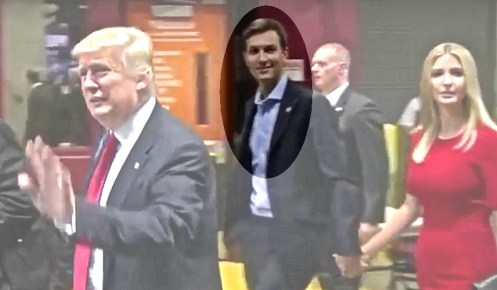
In TrumpWorld, everything is personal. And the most important things are in the family.
Take the meteoric rise of Ivanka’s husband Jared Kushner, who Trump has named as Senior White House Advisor despite the appointment’s questionable legality because of anti-nepotism rules. [On January 20, just as Trump was taking office, the Justice Department announced that the appointment was legit. Apparently, none of those annoying laws apply to Donald Trump, and besides nobody wants to piss off the new boss.]
Kushner had become an increasingly prominent and powerful member of the Trump team during the campaign and seems to have been “in the room” for almost every important meeting since the election. Clearly, Trump trusts him to handle…um, situations and seems to listen to his advice on hiring and firing. And they both seem to share a taste for revenge eaten cold.
His relationship with Trump looks increasingly like consigliere Tom Hagen’s with Vito Corleone in The Godfather. Or maybe Michael Corleone’s. Or a mash-up of both.
Despite his key role in the new administration, there is remarkably little information about Kushner’s personal political views. His wealthy family (more about that below) has contributed generously to Democratic candidates (including the Clintons and former New Jersey governor Jim McGreevey–the one who resigned in 2004 after being outed as gay following an affair with an Israeli “security advisor”). But the Kushners’ largess seems to have been much more about seeking influence and favors than about political ideology or conviction. As the saying goes, the apple doesn’t fall far from the tree.
Kushner’s backstory is fascinating enough to merit its own miniseries. For a much fuller (and well-sourced) account, it’s definitely worth checking out these profiles that ran in New York Magazine in 2009 and in January of this year. Here’s a very brief synopsis:
Jared Kushner was born in 1981 to a wealthy orthodox Jewish New Jersey family. His father, Charles, made a huge fortune in real estate, often in partnership with his brother and in-laws. Jared was the fair-haired eldest son–extremely intelligent, self-disciplined, and mature beyond his years. To insure his son’s admission to Harvard, Charles made large donations to the university and also to NYU, where Jared later earned JD and MBA degrees, though it seems that someone of Jared’s talent and accomplishments hardly needed to have the skids greased.
The pivotal event in his young life was his father Charles’s arrest in 2004 and subsequent conviction for 18 felonies including tax evasion, illegal campaign contributions, and witness tampering, for which he served two years in prison. This occurred in the midst of (and was partly precipitated by) a bitter, sordid, and very public family battle between Charles and his brother and brother-in-law, which reportedly involved Charles setting the latter up in a motel tryst with a prostitute for the purpose of blackmail. The prosecution was led by none other than Chris Christie, who was then attorney general of New Jersey with higher political ambitions.
By all accounts, this was devastating to Jared, who was only 24 at the time, but he idolized his father and stood by him, believing the conviction was a mistake and politically motivated. It was also a blow to his social standing in New York, but he still had ambition, lots of money, and connections in the real estate world.
He used some of that money to buy the New York Observer, at the time a somewhat tweedy and gossipy tabloid with both a political and literary bent and perhaps best known for publishing the Candace Bushnell columns that became the basis for Sex and the City. But it was widely read and discussed among certain sectors of New York’s elite, and it gave Kushner a different kind of social status at a time when he needed it.
He also made bold bids in real estate, most notably the 2007 purchase of 666 Fifth Avenue for a reported $1.8 billion–then the most expensive real estate purchase in US history. His nascent real estate empire was imperiled by the crash the following year, but Kushner managed to survive the crisis and emerge with his fortune intact and a growing reputation as a young lion on the rise. It’s easy to see why he would catch Donald Trump’s approving attention.
About the same time that he made his big splash in New York real estate, Kushner began dating Ivanka Trump. According to various reports, his orthodox family initially opposed the match on religious grounds. But those objections were overcome when Ivanka agreed to convert. (Perhaps further evidence that Trump family religious convictions might be somewhat situational and fluid.) The couple married in 2009.
Theoretically, religion isn’t supposed to matter in American politics. But of course it does tremendously, and Kushner’s strong orthodox Jewish credentials have been helpful to Trump in defending against charges of antisemitism among some of his alt-right fans. According to the New York Times, “when the Israeli ambassador to the United States, Ron Dermer, wanted to communicate with Donald J. Trump, he ended up on two occasions in the Manhattan office of…Jared Kushner.” It is unclear if Kushner had any influence in picking Trump’s nominee for US Ambassador to Israel, David Friedman, who is aligned with the Israeli far right.
It’s not too much of a stretch to see Kushner as a more soft-spoken, less flamboyant, younger version of his father-in-law, i.e., someone who was born to wealth; used his connections, chutzpah, and vast ambitions to build success in business; is not fundamentally ideological; and sees politics as the ultimate way of accruing status, wealth, and respect. Both seem to have something to prove to those who have disrespected them.
After all, Jared Kushner now has the ear of the President of the United States, and Chris Christie’s political career sleeps with the fishes.
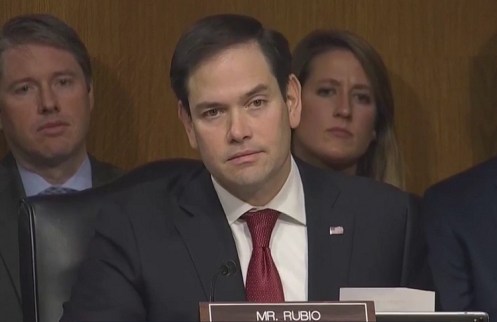
Well, it’s official: Marco Rubio has no backbone. When push comes to shove, he will cave.
If there were any lingering doubt about that, it disappeared today when he announced that he would support the confirmation of Rex Tillerson as Secretary of State. Rubio’s sharp questioning of Tillerson–particularly over ties with Russia–during the confirmation hearings had raised some hopes that he might vote against Tillerson in committee. But no.
Rubio’s statement noted that he continued to have reservations about Tillerson. But he evidently decided that it was better to go along rather than further risk the wrath of The Donald. He manfully asserted, however, that “upcoming appointments to critical posts in the Department of State are not entitled to and will not receive from me the same level of deference I have given this nomination.” Way to show that fighting spirit, Marco!
During the campaign for the Republican nomination, Rubio famously called Trump “a con artist” and stated that Trump is “wholly unprepared to be president of the United States.” He said he could not allow turning over “the nuclear codes of the United States — to an erratic individual — and the conservative movement — to someone who has spent a career sticking it to working people.” Rubio was also responsible for the “tiny hands” meme that still has traction with late night comedians. So he has plenty of reason to fear that the long knives might come out at some point.
But, of course, he ended up endorsing Trump for president, even though he said “I’ve stood by everything I ever said in my campaign.” Huh? How does that work exactly?
No, Marco, you can’t have it both ways. You can’t denounce someone and then turn around and endorse him, but expect to get credit for your “reservations.”
Or maybe you can. Florida voters had their chance to get rid of Rubio in November, but re-elected him. Admittedly, the national Democratic Party gave at best limited support to his opponent, Patrick Murphy, whose media campaign went all warm and fuzzy instead of attacking Rubio on his blatant hypocrisy. But Rubio continues to skate by on his charm and Sunday-school-boy looks.
To be fair, he’s not alone, with the other putative “independent” Republicans in the senate like John McCain and Lindsay Graham obediently toeing the party line as well. The Republican leadership had already said that they would bring the Tillerson nomination to a full senate vote even if he lost the vote in committee. Confirmation was probably inevitable.
So the State Department goes to the Big Oil (and, who knows, the Russian?) candidate. Thanks for your “reservations,” Marco.
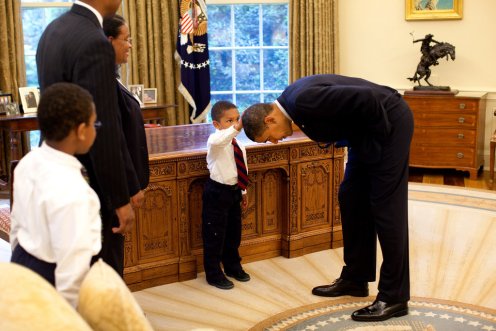
I’m taking a day to reflect on where we are as a country and, most of all, what we are losing as President Barack Obama comes to the end of his term.
When Obama took office eight years ago, the country was in its worst crisis since the great depression. The expectations placed on his shoulders were impossible for anyone to achieve. Like most people, I have occasionally had my hopes disappointed because his administration could not do everything I wanted to happen. But–against the most implacable and vicious opposition–he was able to accomplish extraordinary things.
Through it all, he has shown the most remarkable intelligence, patience, resolve, compassion, and dignity. This man is pure class. And his family has made the country proud.
Now we are in a crisis of a different sort, and I’m clearly not alone in my fears that we are entering a period when our democratic and social institutions are threatened in ways that are not yet clear.
But today, I want to give homage to Barack Hussein Obama. He has done us proud, and I am immeasurably grateful. This is the image of him that I will carry for the rest of my days.

Is there any greater cynicism than nominating Rick Perry to head the cabinet agency that he once said he would abolish–if only he could remember which one it was?
Perry was perfect for Texas politics: an affable good-ol’-boy manner, Marlboro Man looks, a fabulous head of hair, chummy ties with the oil-and-gas industry, and bedrock conservative views on almost everything.**
His sole qualification for Secretary of Energy, however, seems to be that Texas has a lot of oil. And, of course, that appointing him to the cabinet is a kind of exquisite revenge for having denounced Trump in July 2015 as a “barking carnival act” and a “cancer on conservatism”. Now look who’s sucking up to The Donald!
Perry initially seemed confused about the mission of the Department of Energy, one of whose primary functions is to guide the country’s nuclear policy, including managing the US nuclear weapons arsenal and international non-proliferation efforts. The outgoing secretary, Ernest J. Moniz was chairman of the MIT physics department and an eminent nuclear physicist. Moniz’s predecessor, Stephen Chu, was a Nobel laureate in physics. Perry studied animal husbandry at Texas A&M (another ideal credential for Texas politics), where he reportedly earned Ds in his science classes.
As governor, Perry supported teaching creationism in Texas schools, and he doesn’t believe in climate change. When Texas had a historic drought in 2011, his response was three days of prayer for rain.
Moniz was one of the co-negotiators of the agreement to end the Iranian nuclear weapons program. Trump has denounced that agreement, and Perry joined in the almost universal Republican opposition to the deal, because…you know,…Iran. Perry has virtually no experience in international relations, unlike Bill Richardson (a former non-scientist Secretary of Energy) who had served as US Ambassador to the United Nations.
Perry has made much of the enormous growth of wind-generated energy in Texas during his tenure as governor, but it is unclear that he actually had much to do with that. According to The Texas Observer (the state’s venerable watchdog journal), “the overarching theme of Perry’s environmental and energy record is a laissez-faire approach to regulation punctuated by heavy lifting for campaign donors and special interests.”
Perry used an executive order to fast-track approval for eleven coal-burning power plants for Texas’ largest utility, TXU Energy (now Energy Future Holdings), despite enormous and diverse opposition in the state. According to the Texas Observer, Perry received at least $630,000 in contributions from TXU during this period. Three of the plants were eventually built.
Perry’s acquaintance with nuclear issues consists mainly of his cozy relationship with Waste Control Specialists (WCS), a company owned by the late Dallas billionaire Harold Simmons, a big contributor to Perry but best known for funding the Swift Boat attacks on John Kerry. Again according to the TO, in 2003 Perry signed a bill privatizing nuclear waste disposal that was specifically crafted for WCS, and then greased the permit process for the company to open a nuclear waste dump in West Texas, despite warnings from geologists about the danger of contamination of aquifers. Perry’s appointees have since approved expansion of the facility and the shipment of waste from other states. WCS now has a proposal before the Nuclear Regulatory Commission to store spent nuclear waste at the facility which will be up for review in 2019.
Perry’s hostility toward the EPA is well-documented. Texas filed 19 suits against the EPA during Perry’s 14 years as governor, and he called the EPA “a cemetery for jobs.” He would almost certainly work hand-in-glove with Scott Pruitt to destroy that agency if they are confirmed.
Hell, read the whole Texas Observer report here!
Perry’s other political views (hostility to gay marriage and gay rights in general, relative (for a Republican) sympathy towards immigrants, etc.) are less relevant for the Energy job.
What is relevant is his spectacular lack of qualifications for the position. If you agree, let your senators know it! Info on contacting them is here.
**Disclosure: I spent most of the first 30 years of my life in Texas, so I know something about the state.
 TrumpWorld for Beginners